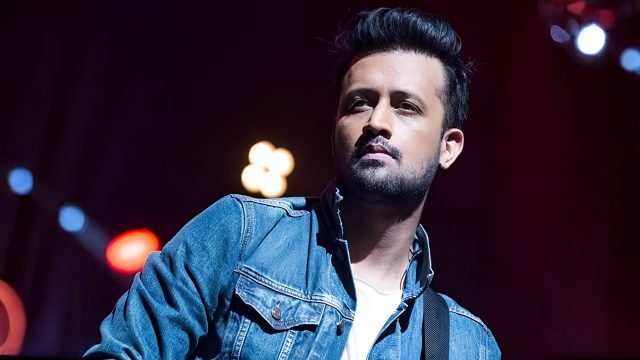
Who Is Sajjad Ali?
There are singers who have hits, and then there are artists who become part of the cultural fabric of a country. Sajjad Ali belongs firmly in the second category. Over a career spanning more than four decades, he has moved between classical music, pop, rock, ghazal, Sufi-infused compositions, and film soundtracks with a naturalness that very few artists anywhere in the world have managed. He did not chase trends. He set them, walked away from them, and came back stronger every single time.
Sajjad Ali, born in 1966, is a Pakistani semi-classical, pop and rock singer, poet, actor, film director and film producer from Karachi, Pakistan.What makes his story remarkable is not just the length of the career, but the consistency of quality across every chapter of it.
Roots in a Musical Dynasty
Sajjad Ali did not stumble into music. He was born into it, shaped by it, and trained within one of the most respected classical traditions in South Asia.
His father, Shafqat Hussain, known as Sajan, was a Pakistani film actor and cricketer. Sajjad completed his F.A. degree from National Arts College, Karachi. After that, his uncle Tassaduq Hussain started teaching music to him with his classical music collections. During his training, Hussain played music from classical artists such as Ustad Bade Ghulam Ali Khan, Ustad Barkat Ali Khan and Ustad Mubarak Ali Khan, who were all Sajjad Ali’s grand-uncles. He was also briefly trained by his uncle Ustad Munawar Ali Khan from India. Sajjad Ali belongs to the Kasur Patiala Gharana of classical musicians.
The Kasur Patiala Gharana is one of the oldest and most distinguished classical music traditions in South Asia. Being trained within that lineage gave Sajjad Ali something that no recording contract or music video could ever provide: a technical foundation built on centuries of musical knowledge. That foundation is audible in every note he sings, whether it is a folk-influenced pop track or a deeply emotive ghazal.
A Child Prodigy Who Grew Into a Legend
Sajjad Ali’s first classical hit album, Master Sajjad Sings Memorable Classics, was released in 1979 by EMI-Pakistan. He was thirteen years old. The album featured renditions of poetry by Hasrat Mohani and Momin, performed alongside musical arrangements drawing from the work of Mehdi Hassan and Ghulam Ali. It was an extraordinary debut for someone that young, and it told the industry early on that this was not an ordinary talent.
He became famous at the 25th anniversary of PTV’s stage show Silver Jubilee directed by Shoaib Mansoor, by singing the song Banwari Chakori, originally sung by Noor Jehan. Covering Noor Jehan at a PTV special event and earning public recognition for it at the age of seventeen was the kind of moment that defines a career before it has even properly begun.
The 1990s: When Pakistan Fell in Love With Babia
If the early years established Sajjad Ali as a serious classical talent, the 1990s turned him into a mainstream phenomenon. His pop breakthrough came with an energy and momentum that the Pakistani music industry had rarely seen before.
Titled Babia 93, the album contained three hit singles: Babia, Bolo Bolo, and Kuch Larkiyaan, and turned Sajjad Ali into a household name. Between 1993 and 2002, Sajjad released numerous albums including the popular Chief Saab in 1995, Moody in 1996, and Sohni Lag Di in 1999.
These albums were not just commercially successful. They were emotionally resonant works that captured the mood of a generation. Har Zulm alone has crossed 41 million views on YouTube today, a number that reflects how deeply those songs have stayed with listeners over time. Chief Saab became one of those albums that people still reference when they talk about the golden era of Pakistani pop music.
A Complete Artist: Film, Direction, Acting and Composition
Sajjad Ali has never been content to exist only as a singer. His creative ambitions have always extended outward, into storytelling, film, and visual art.
Sajjad directed his first telefilm, Love Letter in 1989, and then his first full-length motion picture, Aik Aur Love Story in 1998. He also performed as an actor and a singer in a film, Munda Tera Deewana.
Two new compositions of Sajjad Ali from the film Bol by Shoaib Mansoor were released by Tips music in India and by Fire Records in Pakistan in 2011. Working with Shoaib Mansoor, one of Pakistan’s most respected directors, on a film as socially important as Bol speaks to the level of artistic credibility Sajjad carries within the industry.
He also performed Kir Kir on Coke Studio, and in Season 10, his daughter Zaw Ali featured in Coke Studio Pakistan in 2017 singing Ronay Na Diya alongside him. That father-daughter performance became one of the most shared moments from that season and introduced a whole new generation to the depth of Sajjad Ali’s artistry.
Tamasha, Collaborations and Staying Relevant
One of the most telling signs of an artist’s greatness is the ability to evolve without losing what made them great in the first place. In 2017, Sajjad Ali did something no one expected when he collaborated with rapper Bohemia on the track Tamasha. The single became a massive hit on YouTube and social media. It was his first collaboration of this kind. The combination of Sajjad’s melodic vocal style with Bohemia’s rap energy worked in a way that surprised even longtime fans, and it proved that Sajjad Ali was not an artist stuck in the past.
Indian rapper Honey Singh praised his song Lagaya Dil for its poetry, calling it simple but deeply meaningful. Legendary vocalist Shreya Ghoshal also publicly admired his composition Pardes for the beauty of its music and lyrics. When artists of that calibre acknowledge your work, it means your voice has traveled well beyond borders.
The Sitara-e-Imtiaz: Pakistan’s Highest Honour
On 23rd March 2019, the Government of Pakistan awarded Sajjad Ali the Sitara-e-Imtiaz for Best Singer.The Sitara-e-Imtiaz is one of Pakistan’s highest civilian awards, given in recognition of outstanding contributions to the arts, science, or public service. Receiving it in the music category places Sajjad Ali in a very small group of artists whose contribution to Pakistani culture has been formally acknowledged at the national level.
That honour does not come from album sales or YouTube views. It comes from decades of consistent creative excellence, from the respect of peers, and from a body of work that has genuinely shaped the musical identity of a nation.
Why Book Sajjad Ali for Your Event?
A.R. Rahman has described Sajjad as the original crossover: “From the realm of the classical, he metamorphosed into one of the brightest lights of Pakistani pop. He is one of the few singers in Pakistan who seems a complete singer. As far as skill is concerned I feel nobody compares to Sajjad Ali.”
When A.R. Rahman calls you a complete singer, that is not a compliment. That is a verdict. Booking Sajjad Ali for your event means bringing a performer whose live presence is backed by forty-plus years of mastering his craft on stages across Pakistan and internationally. Whether your event calls for ghazal, pop classics, or the kind of Punjabi-infused energy that fills a wedding hall with life, Sajjad Ali delivers every time.
At Youzarsif Network, we connect clients with Pakistan’s most respected and verified performing artists. Our team manages every step of the booking process from the initial inquiry to performance day so that your event runs exactly as planned.
To book Sajjad Ali for your next event, visit our booking page or reach out to our team directly today