Rizwan Muazzam
Description
Rizwan Muazzam Qawwali – Carrying a 700-Year Tradition With Their Own Voices
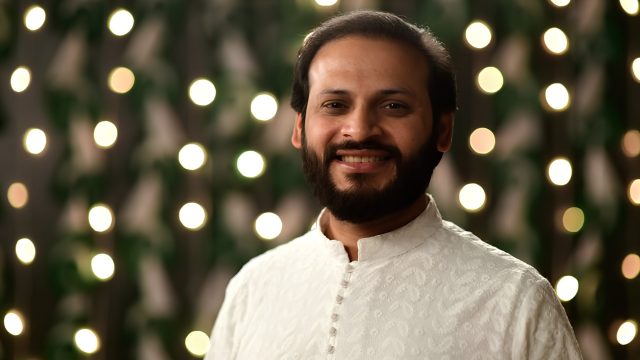
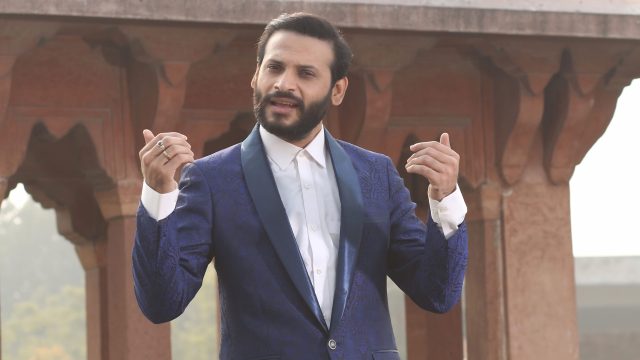
When Nusrat Fateh Ali Khan passed away in 1997, the qawwali world felt the loss immediately. The man who had taken this ancient Sufi devotional tradition from the shrines of Pakistan to the concert halls and festival stages of the world was gone, and no one was certain what would come next. What came next was Rizwan and Muazzam Ali Khan. Two brothers from Faisalabad, teenagers when their uncle died, who stepped into the void not to imitate what had been, but to carry the tradition forward with their own voices and their own artistic identity.
Rizwan and Muazzam Mujahid Ali Khan are the torchbearers of a tradition that goes back over 700 years, the tradition of qawwali. When the unforgettable qawwali singer Nusrat Fateh Ali Khan died in Pakistan in 1997, he left a musical vacuum into which stepped his two teenage nephews. Despite their extreme youth, they were determined that their group Rizwan-Muazzam Qawwali should continue their uncle’s pioneering efforts to transcend cultural, language and religious barriers and to bring to the world the devotional but vibrant Qawwali vocal music of the Sufi mystics of the Islam religion.
A Dynasty That Spans Six Centuries
The weight of heritage behind Rizwan and Muazzam is something very few artists anywhere in the world can claim. The brothers come from a distinguished lineage of Qawwali music that spans over five centuries. Their grandfather, Mubarak Ali Khan, paternal uncle of Nusrat Fateh Ali Khan, played a pivotal role in teaching Nusrat the art of Qawwali.
The siblings come from a veritable Qawwali dynasty comprising some 600 years of qawwals. Their uncle, the late Nusrat Fateh Ali Khan, widely considered as the Shahenshah-e-Qawwali, the King of Qawwali, helped bring Qawwali to a global audience, spreading the Sufi Islamic form’s message of spiritual love and longing to connect with a divine, higher power, regardless of any perceived barriers of culture, language, religion or ethnicity.
That family context is not just background information. It is the foundation from which every performance Rizwan and Muazzam give draws its authority and its depth.
Early Training and the Loss That Defined Their Path
In 1992, at the ages of 11 and 9, Rizwan and Muazzam began to learn music from their father Mujahid Khan. Their training was cut short, unfortunately. Only three years into their training, their father passed away. After Mujahid died, the singers were taken under the care of their late uncle, which was instrumental to their development.
Still, when they were children, young Rizwan and Muazzam’s father wanted the pair to focus on their studies, not wishing to distract them by teaching them music just yet. But that thing in their genes, in their bones, still found a way. Without telling their father, the siblings entered school music competitions.
That detail says everything about the kind of musicians they were born to be. The music was not something they chose. It chose them. And when their father and then their uncle both passed within a year of each other, the responsibility of carrying one of the world’s most important musical traditions fell entirely on their young shoulders.
Their Gharana is known for not taking students who are direct descendants of the Ustad. So the fact that they could learn from their father and uncle was pretty amazing. They became close to Nusrat almost right away. Because of bad luck, they only spent a year with their uncle before his untimely death.
WOMAD 1998: The World Takes Notice
In 1998, the Lahore-based boys found a welcome audience around 5,000 miles away from home at the WOMAD Festival. A previous iteration of the event back in the summer of 1985 had seen Nusrat Fateh Ali Khan break through to a Western audience beyond the South Asian diaspora, stirring listeners with the moving magic of Qawwali in what would become a career-defining moment. Rizwan and Muazzam carried his torch.
There was a challenge when they first played WOMAD because they did not know if the audience would connect to the music since they did not understand the language. But they soon realised that since qawwali is spiritual, the meaning communicates even if you do not fully understand it. There is an emotion that comes out of each song and it is hard to deny.
That first WOMAD performance launched an international career that has now spanned more than twenty-five years and taken them to every major stage in the world music circuit.
Real World Records and the Album Catalog
Soon after WOMAD, they released their debut recordings, Attish: The Hidden Fire, to acclaim via Real World Records, the label which would give home to several more releases over the next few years. Real World Records, founded by Peter Gabriel and one of the most respected world music labels in existence, had also been the home of Nusrat Fateh Ali Khan himself. Signing to the same label was not coincidence. It was recognition.
The duo has built an international following through acclaimed albums like A Better Destiny and Day of Colours and performances at major venues including the Barbican, WOMAD festivals worldwide, and North America’s leading concert halls.
At the Feet of the Beloved: A 2025 Return
After more than two decades since their last studio album, Rizwan and Muazzam returned in 2025 with something extraordinary. Their new album At the Feet of the Beloved was released on 14 March 2025 on Real World Records. The group toured the UK and North America following the release.
The album features three compositions from the family repertoire never performed by their uncle. The result is the brothers’ first official album in more than two decades. No one has been able to make new qawwali recordings in the classical tradition, since audiences only want to hear Nusrat’s repertoire. There are plenty of qawwali families in Pakistan but they are performing Nusrat’s work and others are mixing it with western influences. We realised that since we carry the family name and experience, we were the only ones that could reignite that history, as Muazzam explained.
Their latest release includes two Urdu and two Punjabi tracks, one of which is an original composition, marking a significant step in the brothers’ evolution of the qawwali tradition.
They also performed the UK premiere of performances from Chain of Light, the lost Nusrat Fateh Ali Khan album discovered 34 years after it was recorded, found in the Real World archives.
The Live Experience: Words From the World’s Top Critics
The quality of a Rizwan Muazzam performance is something that the world’s most respected arts and music publications have tried repeatedly to capture in words.
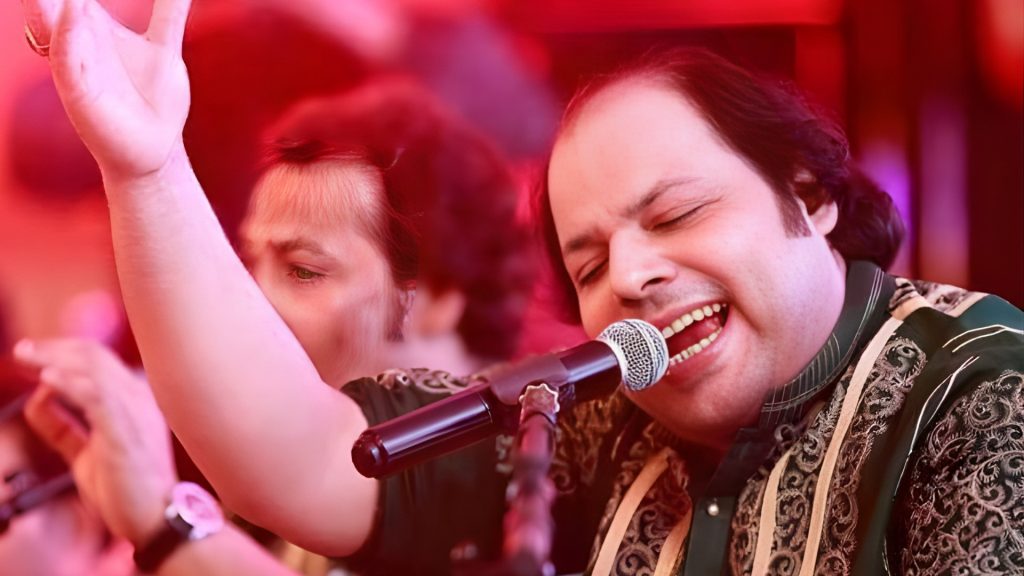
The Guardian described their style as one of the most exhilarating improvised vocal styles on the planet. The BBC wrote that Rizwan and Muazzam’s voices climb and swoop as if riding air currents, with the harmonium seeking a similar undulating flight path while fingertips flutter like hummingbirds across the tablas. The Financial Times gave their live performance four stars.
They perform in traditional Qawwali style, sitting on the ground rather than on seats, which they believe brings them closer to God. They sing in Persian, Punjabi, and Urdu with an intensity that has led one commentator to call them, only half in jest, the Qawwali Clash.
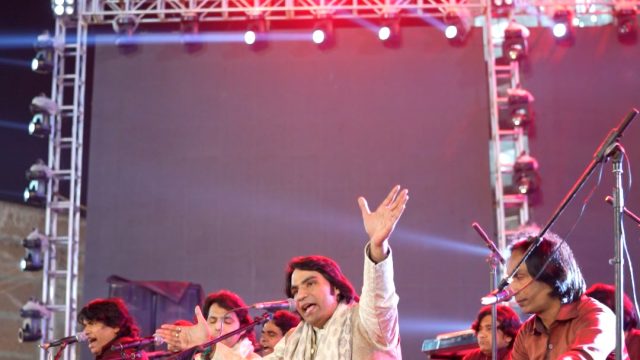
The Rizwan-Muazzam Qawwali Group is made up of the two lead-singing brothers, Rizwan and Muazzam, five secondary singers who lead the choral response with vigorous hand clapping, two harmonium players, and a tabla player.That ensemble, when it performs together, creates a sound that is both architecturally complex and spiritually immediate, something that defies any attempt to reduce it to simple description.
International Presence and Coke Studio
Since 1998, they have had stage performances at several WOMAD Festivals in the United Kingdom. They have given many joint performances at Coke Studio in Pakistan in collaboration with various other musicians, including Shazia Manzoor, and became very popular in Pakistan. The group also performed at WOMADelaide in South Australia.
Their appearances on Coke Studio introduced them to a new generation of Pakistani music fans who may have known their uncle’s name but had not yet discovered the full power of the brothers’ own voices. Those Coke Studio sessions showed Pakistani audiences that Rizwan and Muazzam were not living in Nusrat’s shadow. They were carrying the tradition forward on their own artistic terms.
Why Book Rizwan Muazzam Qawwali for Your Event?
Rizwan and Muazzam Ali Khan are not simply famous qawwals. They are among the most critically celebrated live music acts in the entire world. Signed to Real World Records. Featured in The Guardian, the BBC, and the Financial Times. Performing at the Barbican, the Royal Festival Hall, and WOMAD stages across three continents. Released a landmark album in 2025 after a two-decade studio absence. These are not the credentials of emerging artists. They are the credentials of a group that has spent twenty-five years earning the absolute respect of the global music community.
When Rizwan and Muazzam perform at your event, your audience does not simply hear music. They are transported into a spiritual and emotional experience that the world’s most prestigious concert venues pay to host. For events where genuine cultural significance matters, there is no more powerful choice in the entire landscape of South Asian performing arts.
Contact us today to check their availability and book Rizwan Muazzam Qawwali for your upcoming event.
Review
Login to Write Your ReviewThere are no reviews yet.