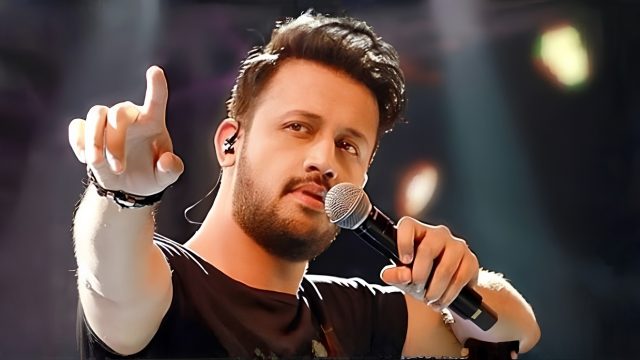
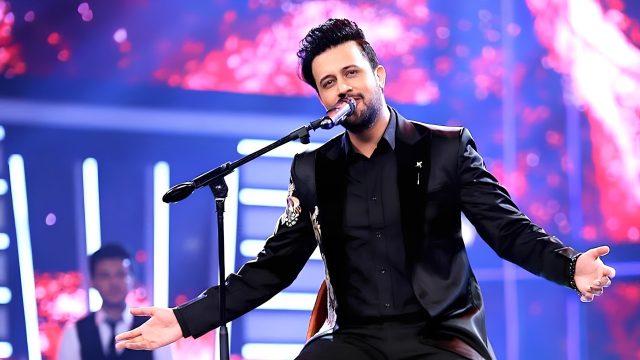
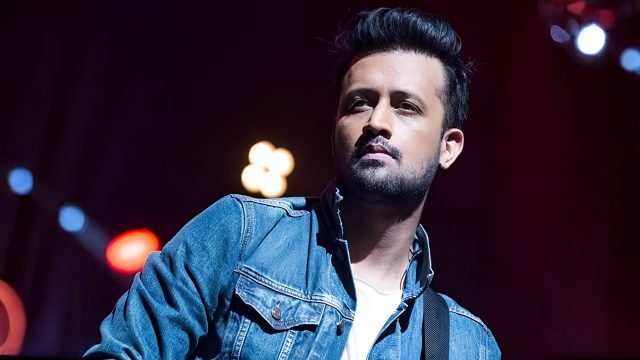
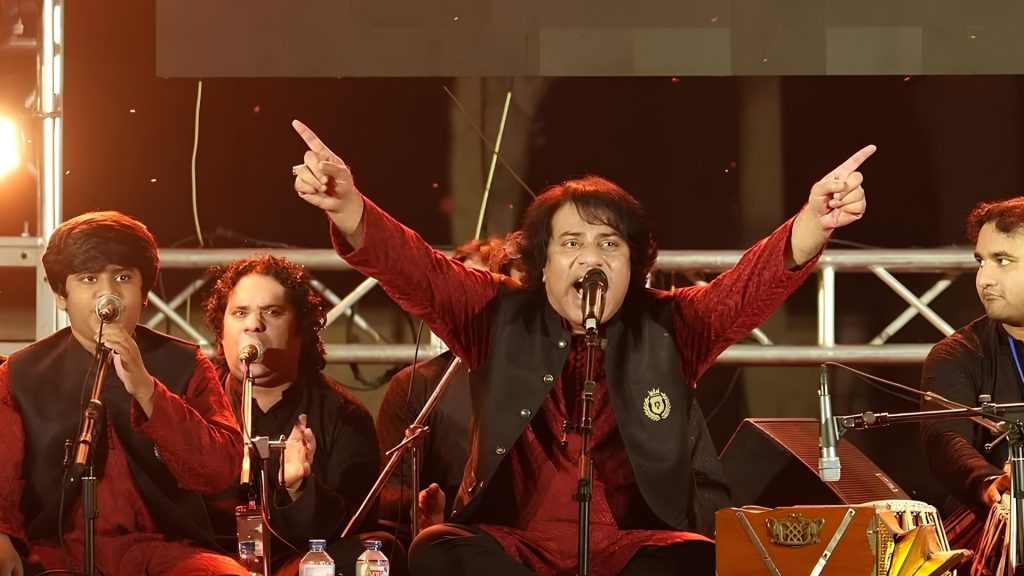
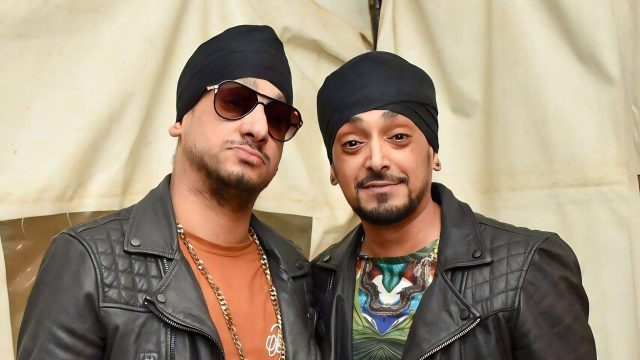
Who Is Javed Bashir?
There is a particular kind of voice that does not need a microphone to fill a room. It carries weight, history, and emotion all at once, and when it arrives in a song, you feel it in your chest before your mind has processed a single word. Javed Bashir has that kind of voice.
Born into a family where music was not a hobby but a way of life, Javed Bashir grew into one of the most respected classical and Sufi vocalists Pakistan has ever produced. His journey from a young student of qawwali in Lahore to a sought-after playback singer in Bollywood blockbusters is a story of genuine craft, patient training, and an artistic commitment that very few musicians sustain across decades.
Javed Bashir, born 8 August 1973, is a Pakistani playback singer who mainly sings classical songs. His parents moved from Jalandhar, Punjab, India, to Pakistan during the Partition in 1947. Though he has been singing since childhood, the professional training of qawwali began from 1992 with his father Ustad Bashir Ahmed Khan, himself a well-known qawwal. Javed Bashir also took classical vocal training from his uncle Ustad Mubarak Ali Khan.
Training under both a respected qawwal father and a master of classical vocal technique gave Javed Bashir a foundation that most singers never get close to. The Patiala Gharana tradition, with its emphasis on intricate raag elaboration, taankari, and emotional depth, shaped his voice into something that is both technically precise and deeply human.
Learning the Craft the Right Way
Javed Bashir did not take shortcuts. His formal training in qawwali began at nineteen and continued under his father’s guidance through the 1990s. That training covered not just the mechanics of singing but the entire emotional and poetic universe of classical South Asian music, its modes of expression, its restraint, its power.
When you listen to his soulful voice, high notes, and powerful alaaps and raags, you cannot stop yourself from imagining him seated on a quilted mat, twirling and moving his fingers as he sings his heart out. Owing to his ability and training under Ustad Mubarak Ali Khan, Javed Bashir has one of the most coveted voices in the world.
His ability to move between pure classical performance, Sufi poetry, folk music, and contemporary fusion is not something he developed by accident. It came directly from the breadth of his training and a genuine curiosity about every form that the voice can take.
The Mekaal Hasan Band and a Career-Defining Collaboration
A career-defining moment came in 2002 when Javed Bashir joined the Mekaal Hasan Band, a popular Sufi rock band in Pakistan. The band’s project was ambitious and unusual: to take the spiritual poetry of Sufi tradition and place it inside a rock instrumentation framework without losing the soul of either. Javed Bashir’s classical voice was exactly what that concept needed.
He was featured on Sampooran, the band’s first full-length album in 2004, which landed Bashir mainstream success and appreciation. The album introduced him to a wide audience that had never encountered this kind of classical-rock fusion before, and the response was immediate.
Then came Chal Bulleya. The track Chal Bulleya from the album Saptak in 2009 earned him the Best Singer of the Year award at the 2010 Lux Style Awards.It is a song that sits at the intersection of everything Javed Bashir does well. The Sufi poetry of Bulleh Shah, delivered with classical vocal power over a rock backdrop, created something that felt both ancient and completely alive. It remains one of the most celebrated tracks in the history of Pakistani fusion music.
Coke Studio: Reaching New Audiences
His popularity skyrocketed when he performed Aaj Latha Naeeo for Season 2 of Coke Studio Pakistan in 2009. Coke Studio gave Javed Bashir a platform that put his voice in front of an entirely new generation of music lovers, many of whom had never heard classical Sufi vocal performance before. His appearances across multiple seasons of the programme, including a collaboration with his younger brother Akbar Ali on Naina Moray in Season 10, became some of the most shared and discussed performances the show has produced.
As a solo artist, his versatility has taken him to Coke Studio Pakistan, most notably spawning Charkha in 2024, highlighting his ability to blend deep classical training with raw emotional power. Still performing and recording at the highest level well into his fifties, Javed Bashir’s consistency is itself a statement about what serious musical training produces.
Bollywood and International Recognition
Javed Bashir’s entry into Bollywood was not a sudden leap. It was a steady, well-earned progression. He made his entry in Bollywood through A. R. Rahman’s scored film Yuva, where his presence was heard in the background score singing Alaps and Sargams. Having A. R. Rahman recognize the quality of your voice for a film soundtrack is a credential that opens doors across the entire South Asian music industry.
His formal playback debut followed with Piya Tu Kaahe Rootha Re from Kahaani, composed by Vishal-Shekhar. From there, his Bollywood career grew rapidly. His breakthrough came with O Rangrez from Bhaag Milkha Bhaag, a Sufi-inspired duet with Shreya Ghoshal composed by Shankar Ehsaan Loy, which became a chart-topping hit for its fusion of folk and contemporary elements. A duet with Shreya Ghoshal on a major Bollywood biopic is not something that comes to an artist without a track record of excellence behind them.
The song Mera Yaar from Bhaag Milkha Bhaag won him the Mirchi Music Award for Song Representing Sufi Tradition in 2014. Winning a Mirchi Music Award for Sufi tradition in a Bollywood film is a rare achievement that speaks to how authentically he carried classical sensibility into commercial cinema.
His contribution to Bajirao Mastani, one of Bollywood’s most celebrated period films, further confirmed his place among the most trusted classical voices in South Asian playback singing. He has sung songs for Bollywood films including Cocktail, Kahaani, Rush, Bombay Talkies, Bhaag Milkha Bhaag, Once Upon a Time in Mumbai Dobaara, and Bajirao Mastani.
A Voice That Builds Bridges
Beyond his recording work, Javed Bashir has actively pursued music as a tool for cultural connection. He has been working on a musical project for Indo-Pak peace in collaboration with Shankar Mahadevan. That collaboration between a Pakistani classical vocalist and one of Bollywood’s most respected composers and singers carries a message that goes beyond music, and it reflects the kind of artist Javed Bashir is: someone who believes that great singing has the power to cross borders that politics cannot.
Why Book Javed Bashir for Your Event?
Javed Bashir’s ability to straddle classical and pop and rock music makes this versatile singer a cut above the rest. He has described himself as one of the busiest artists in the industry because he manages many aspects of his music, from qawwali to his career with Sufi rock.
That range is exactly what makes him so valuable as a live performer for events. Whether your event calls for a purely classical Sufi night, a high-energy fusion performance, or the kind of intimate ghazal recital that leaves audiences moved and quiet, Javed Bashir brings the depth and experience to deliver every one of those experiences with genuine authority.
He has performed across Pakistan, India, the Middle East, Europe, and North America. His live performances are not just concerts. They are experiences built on decades of mastery that very few artists anywhere in the world can offer.
At Youzarsif Network, we work with Pakistan’s most respected and verified performing artists and handle every step of the booking process for our clients. Whether you are planning a corporate gala, a cultural festival, a Sufi night, or a high-profile wedding, our team is here to connect you with the right artist and manage all logistics professionally.
To book Javed Bashir for your next event, visit our booking page or contact our team directly today.